Faith Actors and Faith Communities on the Frontline of Supporting Vaccination Efforts Around the World
2022
Photo: CRS Uganda
Zephaniah Women Education and Empowerment Foundation (ZWEE)
For the past several months, Sister Zeph and her team at the Zephaniah Women Education and Empowerment Foundation (ZWEE) in Pakistan, have been traveling door-to-door to encourage their community to receive the life-saving COVID-19 vaccine. Through this outreach, Sister Zeph is sitting down with one family at a time to learn about vaccine hesitations of community members and discuss the importance of getting vaccinated. Zeph demonstrated her trust in the vaccine by getting vaccinated herself and encouraging the other 26 people working with her organization to do so. So far, Sister Zeph and her team have helped 1800 people get vaccinated through these efforts.
Like many parts of the world, Pakistan experiences significant barriers to achieving widespread vaccination against the coronavirus. In addition to lack of access, people remain hesitant to receive the vaccination due to rampant misinformation regarding the vaccine’s safety and effectiveness.

Photo: Sister Zeph receiving the COVID-19 vaccine

Photo: ZWEE community outreach
Sister Zeph explains that she began this campaign after observing the devastating effects the pandemic has had on youth who have been unable to attend school for over two years due to pandemic closures and do not have access to virtual learning options. “The vaccination is the only hope for us to open the way for a normal life.”
Sister Zeph shared that she is inspired by her faith to raise awareness about getting vaccinated as a means to demonstrate love for her neighbor. “My faith is very clear. Jesus Christ once said that if you love your neighbor as yourself, you will be able to enter the Kingdom of Heaven. The Bible instructs us to use our wisdom, and this is a time for us to use our wisdom to end the pandemic by getting vaccinated.”
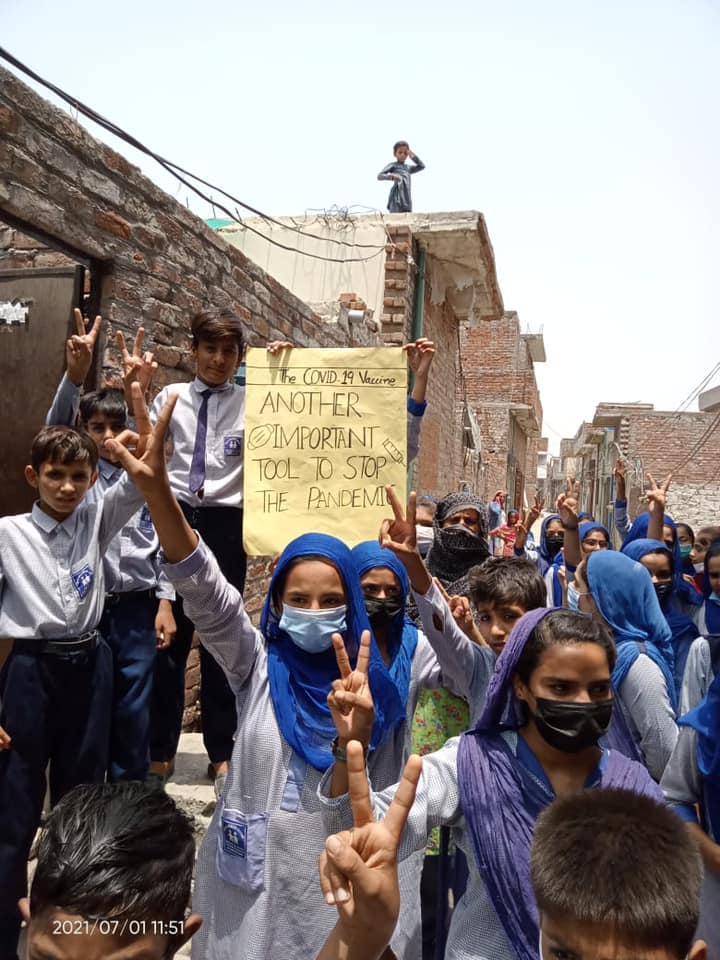
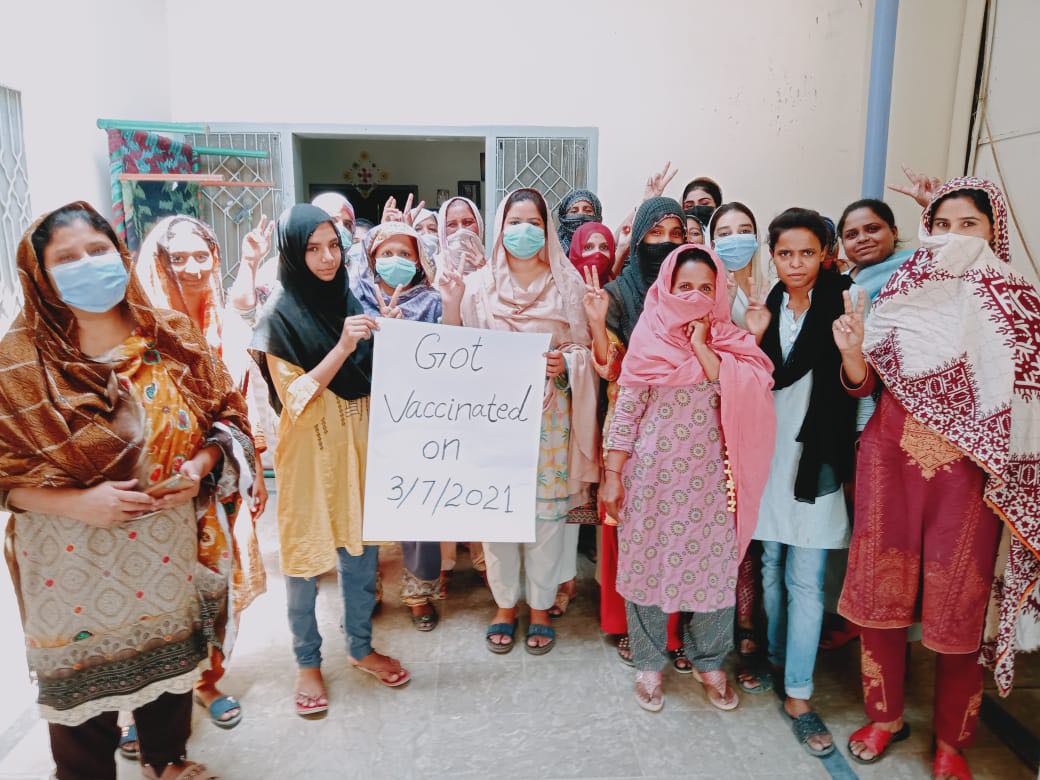
Photo: Community support for COVID-19 vaccination

Photo: Sister Zeph sits with community member through a vaccination process
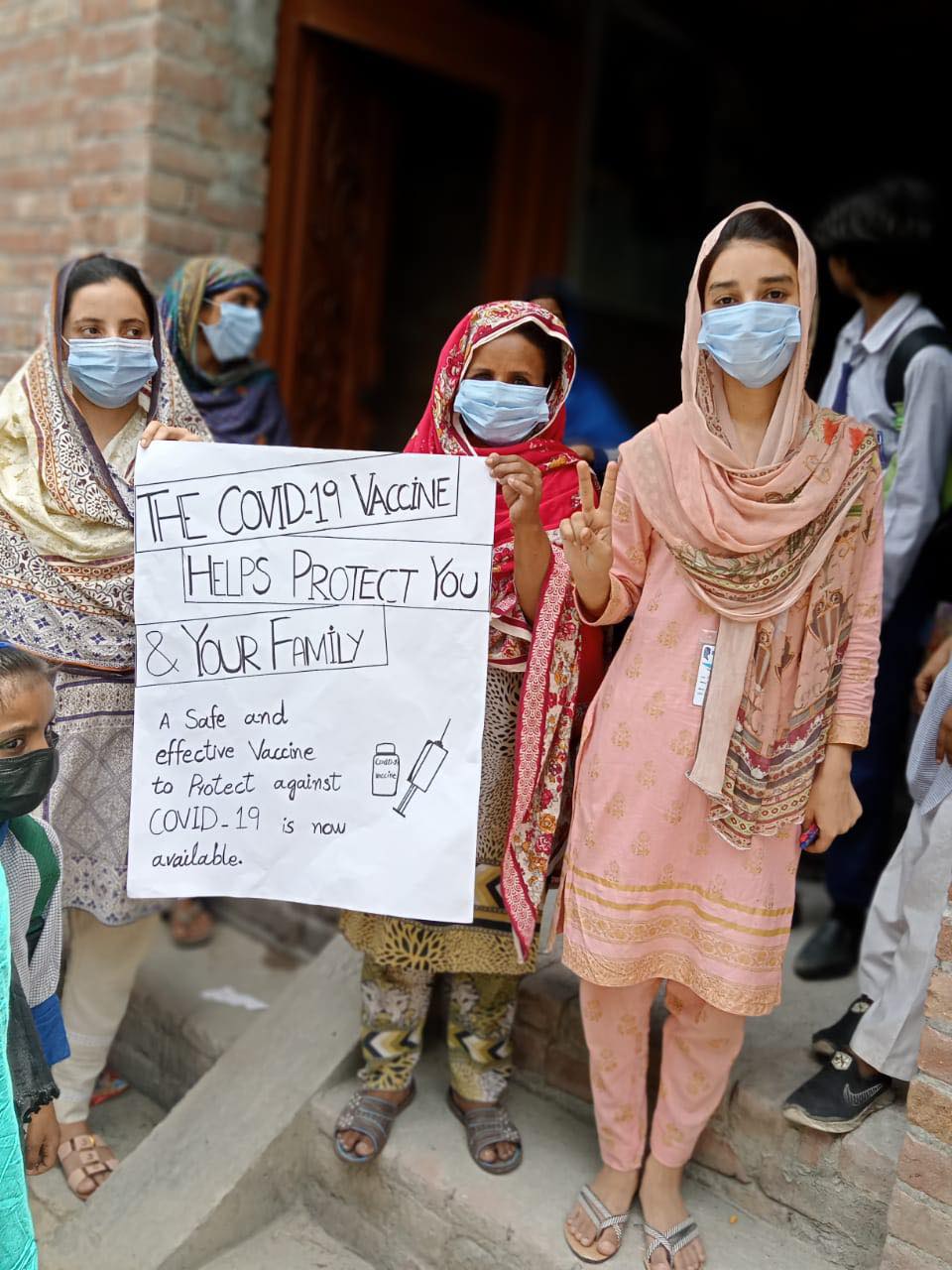
Zeph believes that religious leaders have the responsibility to guide their followers towards prosperity, and religious tolerance, and to use their wisdom to end the pandemic. ZWEE is in need of financial support to expand and continue its vaccination campaign to reach more people.
Around the world, faith communities and faith leaders, like Sister Zeph, are taking an active role in educating their communities on how to prevent the spread of the disease by addressing why it is important to get vaccinated, how to access vaccines, and raising awareness to better understand the dilemma of vaccine hesitancy and resistance.
Supreme Council of kenyan muslims (supkem)
Religious actors are frequently considered influential leaders in their communities and can serve as trusted messengers in increasing vaccine acceptance. Houses of worship are often well positioned in communities with strong community networks that can be quickly mobilized to assist efforts to distribute and administer the vaccine. Moreover, houses of worship can serve as a solution to address issues where there is a lack of medical facilities and access to marginalized communities. Receiving the vaccine in a trusted and safe space is essential to reducing hesitancy.
In Northern Kenya, the Supreme Council of Kenyan Muslims (SUPKEM) is partnering with the Inter-religious Council of Kenya and the Kenya Ministry of Health to bring vaccines to houses of worship and encourage faith leaders to talk to their congregants about the importance of getting vaccinated. As of March 2022, 1,142 people have been vaccinated in Mosques as part of this initiative.
Ibrahim Mohamed Elmi, Project Officer at SUPKEM, shared that religious leaders have been critical in changing perceptions and addressing misconceptions surrounding the vaccine given the high level of trust expressed among their communities. Further, religious leaders are inspired by their faith to help others receive the life-saving vaccine. “The Quran states that anyone who saves one life, saves all of humanity,” Elmi explained.
Elmi explained that this initiative was made possible through successful collaboration between religious leaders and the Ministry of Health at both the local and national levels. A committee of religious leaders was formed in Garissa, Wajir, and Mandera counties in order to identify the most strategic places of worship to host a vaccination clinic. Prior to hosting the vaccination clinic, the committee enlisted a medical doctor and religious leader to sit down with Imams of chosen mosques or to answer questions and extinguish any misconceptions.
Photo: Peace bridge in Ward 5, Zaka District in Masvingo
Mennonite Central Committee (MCC)
Successful collaboration between health officials and religious actors and organizations has been crucial in ensuring equitable and far-reaching vaccination efforts around the globe. For instance, in rural Mwenezi Zimbabwe, the Mennonite Central Committee (MCC) is working to foster collaboration and cooperation between formal and informal health systems and diverse religious communities. Together with the local community organization, SCORE Against Poverty, MCC is working to establish dialogue and cross-referral mechanisms between health officials and religious actors and organizations, alongside raising awareness on the importance of receiving the vaccine. Youth of faith also have a critical role to play in advancing vaccine acceptance and ensuring its efficient and equitable distribution.

Photo: Renovating a section of Neshuro hospital into an isolation center

Photo: Mobile text messaging platform for COVID-19 awareness

Photo: Multi-stakeholder engagement and coordination
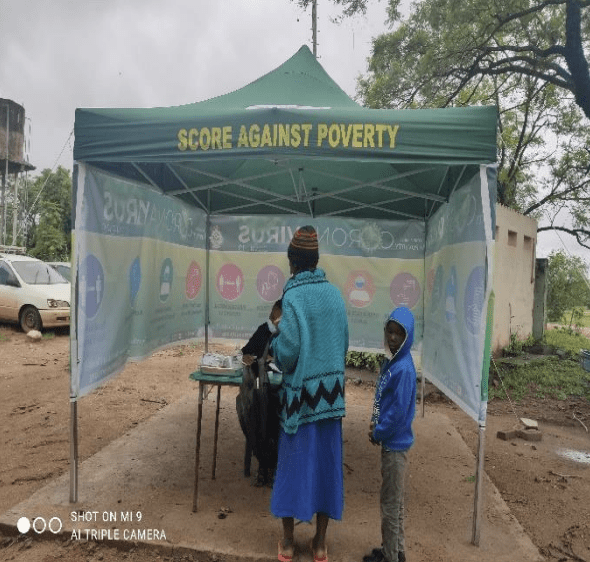
Photo: Screening point and handwashing facilities for the hospital
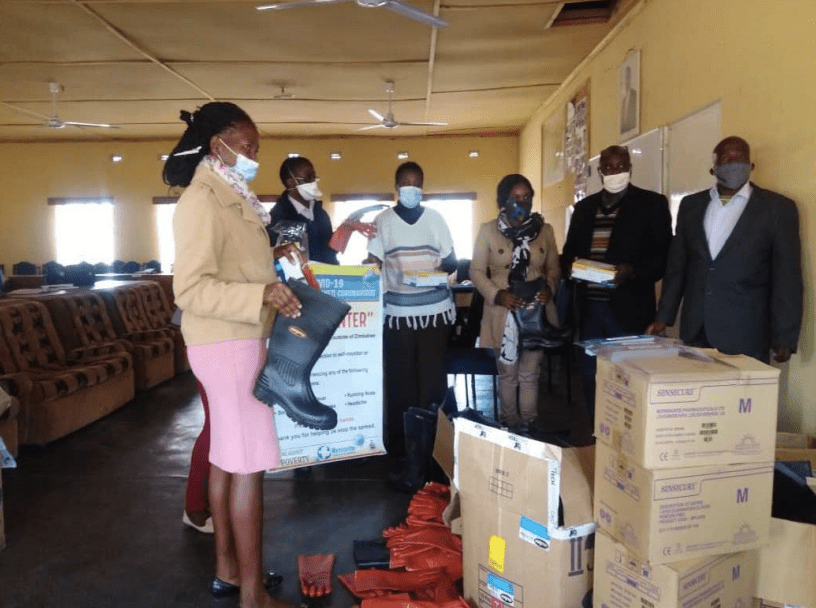
Photo: Distribution of personal protection equipment material
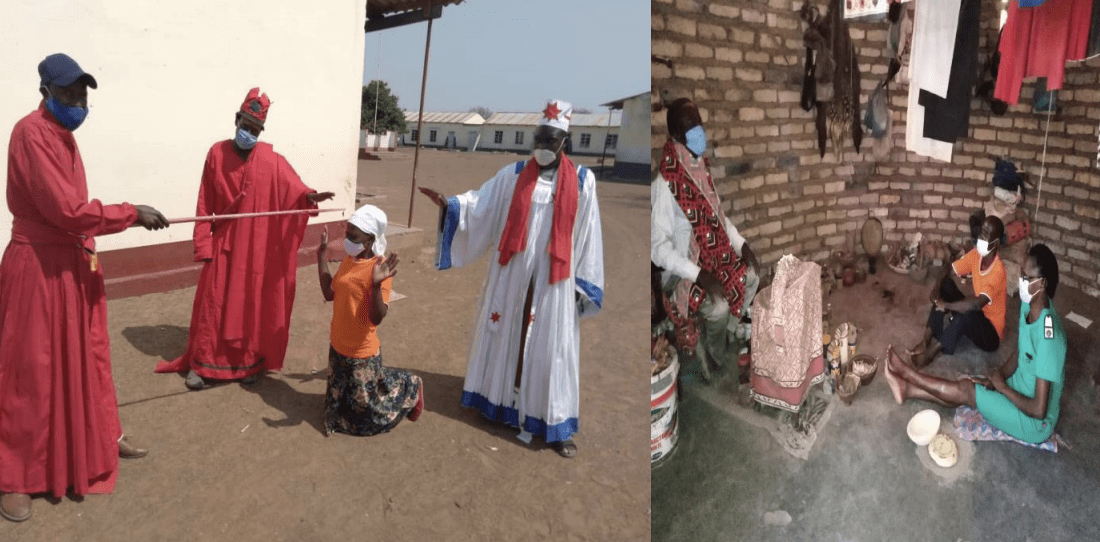
Photo: Interfaith work on COVID-19 awareness and prevention and public health promotion
Vision globale d’orientation des jeunes (vigloj)
In the Democratic Republic of the Congo, Vision Globale D’orientation Des Jeunes (VIGLOJ) is empowering youth involved in its “Young People in Action for Human Rights Club” to take ownership of COVID-19 prevention efforts in their communities, which includes raising awareness of the importance of getting vaccinated.
Dunia Colomba, Founder and Executive Director of VIGLOJ shares that religious actors, including youth, have a critical role to play in mobilizing others to get vaccinated and raising awareness about the importance of getting vaccinated.
“Religious leaders are the most influential people in Congolese society…the words of religious leaders are considered by a large number of the Congolese population as being sacred words that should never be neglected, they play a major role in community mobilization,” says Colomba.

Photo: Community gathers for COVID-19 vaccination awareness

Photo: A health team member vaccinates a man in Moroto district during the February 2022 Accelerated Mass COVID-19 Vaccination campaign. Photo by Kato Chrysestom/CRS
Catholic Relief Services (CRS)
In all of these global efforts, there is an urgent need for the international community to recognize and support the vaccination efforts being led by faith leaders and faith communities. Several international non-governmental organizations are already offering this much-needed support. For instance, Catholic Relief Services (CRS) is working closely with religious and traditional actors to support vaccination efforts across Africa.
“Local religious leaders are critical vaccine advocates, trusted by the communities we serve, and are in a position to directly address misconceptions and concerns that cause vaccine hesitancy and lack of understanding about the virus itself. Faith communities are trusted by community members and by engaging faith communities helped to increase the number of people vaccinated. In addition, COVID-19 vaccine messages were disseminated during church services which helped increase the number of community members reached.”
– Cheryl Morgan, Country Manager at Catholic Relief Services
In Ghana, CRS has established several “Councils of Champions” composed of chiefs, imams, pastors, women leaders, and traditional medical practitioners, to lead community awareness efforts and vaccine promotion sessions.
In South Africa, CRS is partnering with World Vision to engage religious and traditional actors in one-day inter-faith Channels of Hope® COVID-19 vaccine acceptance workshops to use their influence to encourage community members to get vaccinated.

Photo: Vaccination certificate in Uganda
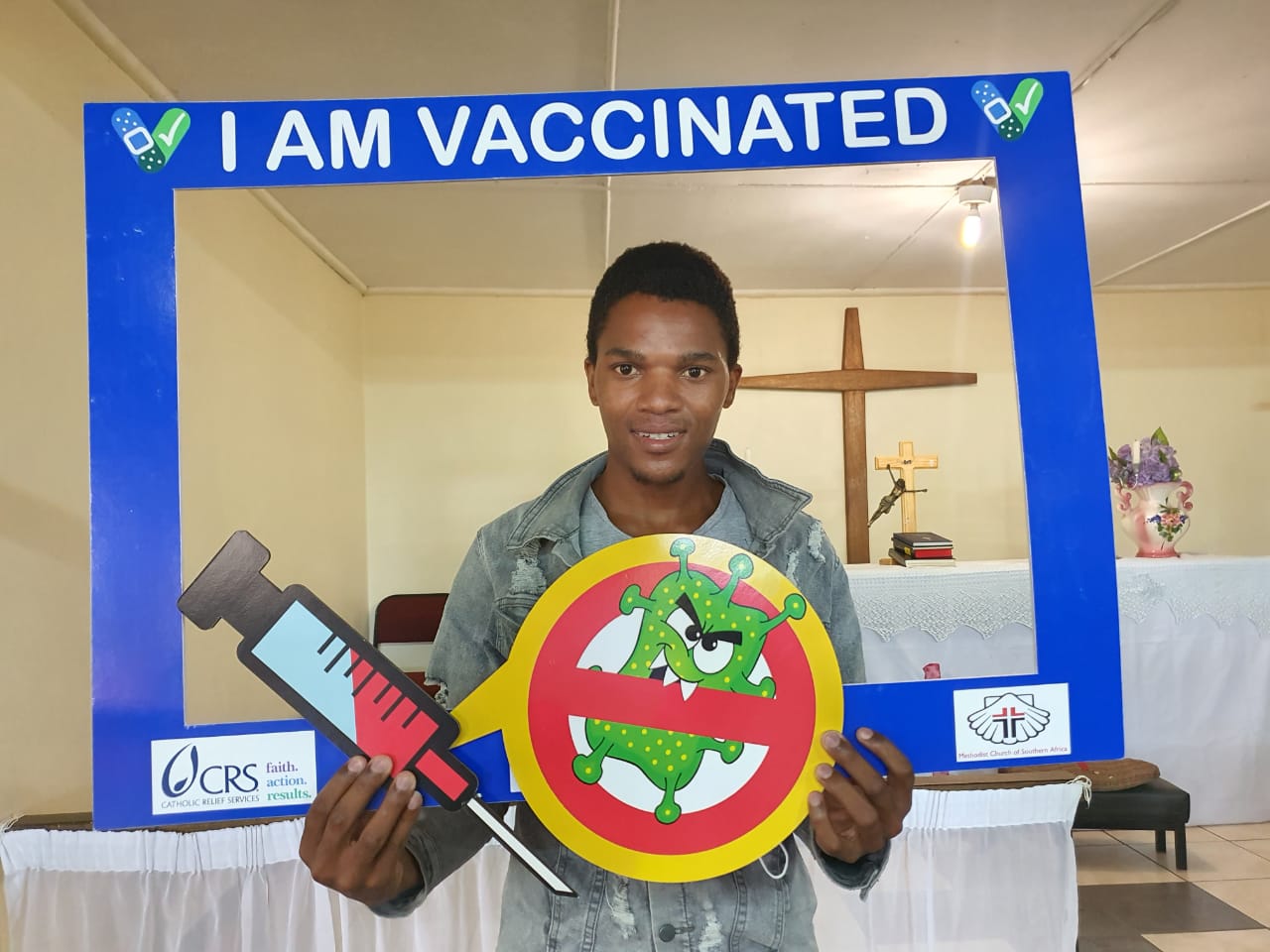
Photo: Young man vaccinated at church in South Africa
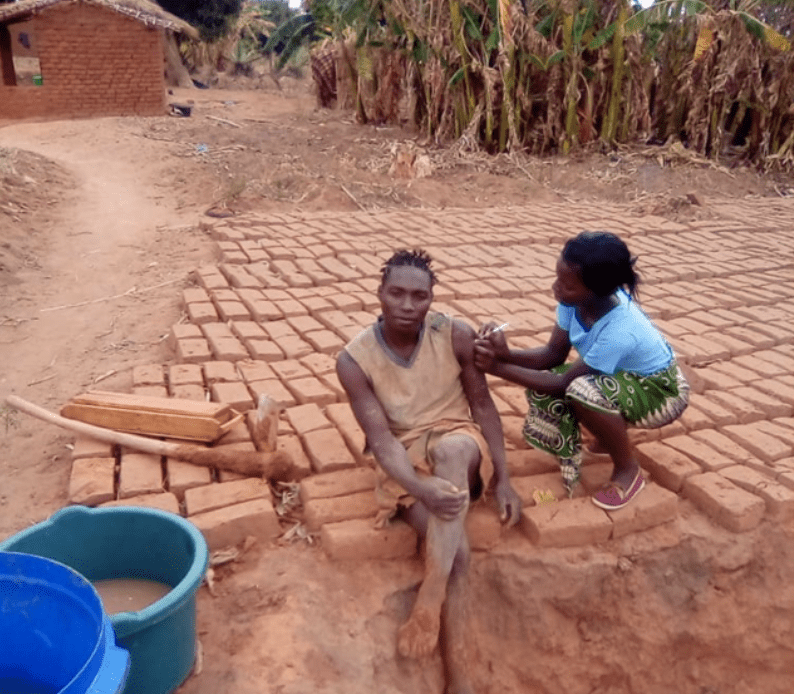
Photo: Door to door vaccination campaign in Malawi
Some of the main topics in the COVID-19 Vaccine Acceptance Channels of Hope Workshop are based on the participants’ own questions, the information they have heard, human immunity, scientific information regarding the vaccines (development, research, side-effects, myths), religious principles regarding caring for the vulnerable in the community, identifying misinformation and providing accurate information.
“Faith communities are major outlets for sharing information on COVID-19 and all related activities and are very critical in rolling out this initiative. Within the faith communities are leaders (pastors and imams) who wield significant influence, trust, and confidence in their followers. Securing participation with faith leaders as social behavior change campaigns and having them publicly get vaccinated has proven to be effective in reducing vaccine hesitancy among community members.”
– Cheryl Morgan, Country Manager at Catholic Relief Services
In addition to addressing misinformation, CRS is partnering with religious and traditional actors to ensure vaccine access. Cheryl Morgan of CRS explains that one of the main barriers to access is the transport cost to vaccine stations. In response to this barrier, CRS, the Ministry of Health, and local faith-based partners are partnering to arrange transport for willing participants to vaccine sites. Vaccine doses and medical staff are provided by the Ministry of Health while faith-based partners assist with transport, tents, and access to Churches for temporary vaccine sites and chairs.